Atomic habits habit stacking gives you a practical way to turn intention into consistent action. Instead of relying on motivation, you connect a new behavior to something you already do every day. When you understand how cues shape behavior, you can design routines that feel automatic and sustainable.
You do not need dramatic willpower to transform your life. You need a reliable structure that makes good habits easier than bad ones. This guide shows you exactly how to use atomic habits habit stacking to build momentum, stay consistent, and achieve measurable results.
What Is Atomic Habits Habit Stacking
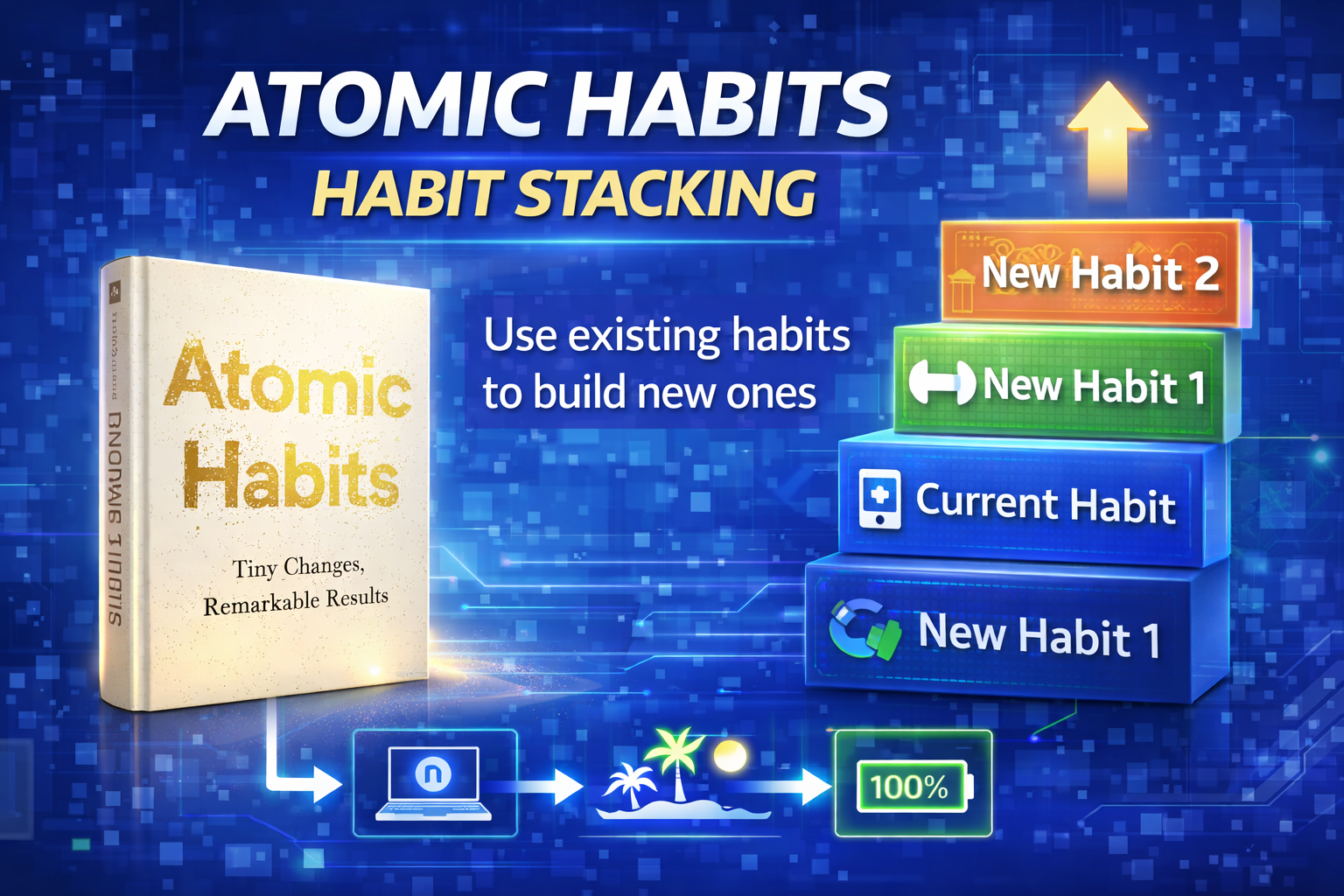
Atomic habits habit stacking is the practice of attaching a new habit to an existing one so the current behavior becomes the trigger for the next action. You use the formula, “After I do X, I will do Y,” which turns vague goals into specific commitments. This structure reduces decision-making fatigue because the cue already exists in your daily routine.
When you brush your teeth every morning, that action is stable and automatic. If you decide that after brushing your teeth you will floss one tooth, you create a tiny but reliable chain. Over time, the new habit grows because your brain associates it with a well-established pattern.
Habit stacking works because it leverages the power of cues rather than motivation. Instead of asking whether you feel like doing something, you simply follow the sequence. You remove uncertainty and create clarity in your behavior.
Why Habit Stacking Works in the Brain
Your brain constantly strengthens neural pathways that you use repeatedly. When you repeat a behavior, those pathways become faster and more efficient, making the action feel automatic. Atomic habits habit stacking taps into this process by linking a new action to a strong, existing pathway.
This phenomenon is often explained through synaptic pruning, where frequently used connections grow stronger and unused ones weaken. By stacking a new habit onto a reliable cue, you anchor it to a reinforced neural circuit. As a result, your new behavior feels less forced and more natural over time.
Research on habit formation suggests it can take an average of 66 days for a behavior to become automatic, although the timeframe varies widely. Habit stacking accelerates this process by removing ambiguity about when the action should occur. You know exactly what triggers the behavior, so repetition becomes consistent.
The Core Formula You Should Follow
The most effective habit stacking follows a simple structure. You identify a current habit, then attach a small and specific action to it. The clarity of this formula prevents confusion and increases follow-through.
Use this structure consistently in your routines:
- After I pour my morning coffee, I will write one sentence in my journal.
- After I sit at my desk, I will plan my top three priorities.
- After I take off my work shoes, I will stretch for one minute.
When you use atomic habits habit stacking, you make your new habit obvious and easy. You eliminate the guesswork that often leads to procrastination. Clarity strengthens commitment and drives consistent execution.
How to Identify the Right Anchor Habits
You should choose anchor habits that already happen daily without effort. These actions are stable cues, such as waking up, brushing your teeth, or opening your laptop. The stronger the existing habit, the more reliable your new stack becomes.
Start by writing down your current routine from morning to evening. Identify moments that rarely change, even on busy days. These moments become the foundation for your atomic habits habit stacking strategy.
If you want to sharpen your focus during short work sessions, you can pair a new behavior with a timed structure that keeps you honest. When you start a task, using the 3 Minutes Timer for better focus helps you commit to action immediately instead of negotiating with distractions. That simple trigger turns your start into a repeatable system you can trust.
Building Momentum with Tiny Actions
You should start with extremely small behaviors that feel almost too easy. When you reduce the size of the habit, you remove resistance and increase the likelihood of repetition. Tiny actions create psychological wins that fuel larger progress.
If you want to exercise regularly, begin with one push-up after brushing your teeth. If you want to read more, read one sentence after getting into bed. The small size of the action makes it difficult to justify skipping.
Atomic habits habit stacking thrives on momentum, not intensity. Once the tiny behavior becomes automatic, you can scale it gradually. The goal is consistency, not dramatic effort.
Creating Powerful Morning and Evening Routines
Morning and evening routines are ideal for habit stacking because they already contain predictable sequences. When you wake up, you likely follow the same pattern every day. You can insert new habits into this chain without disrupting your schedule.
For example, after you pour your coffee, you might review your goals. After reviewing your goals, you might visualize one successful outcome. These stacked behaviors create a structured and empowering start to your day.
Evening routines work the same way, and a short countdown can make follow-through easier when you feel tired. If you set a clear boundary using a timer for 3 minutes, you can reset your space, prep tomorrow’s essentials, and end the day with a quick win. That small ritual reduces clutter in your mind and your home.
Using Environmental Cues to Strengthen Stacks
Your environment can reinforce your habit stacks when you design it intentionally. Visible cues increase the likelihood of action because they make the next step obvious. When you combine environmental design with atomic habits habit stacking, you reduce friction significantly.
Place your journal on your desk if you want to write after opening your laptop. Put a water bottle next to your bed if you want to hydrate immediately after waking up. The physical presence of the cue supports the mental trigger.
You can also use tools you already touch daily as prompts for better choices. When you learn how to set a timer on your iPhone camera, you can reduce setup friction for workouts, meal prep photos, or focused practice sessions. That small setup step turns “later” into a scheduled action.
Avoiding Common Habit Stacking Mistakes
Many people fail because they stack too many habits at once. When you overload your routine, you create complexity that undermines consistency. Atomic habits habit stacking works best when you build gradually and protect simplicity.
Another mistake is choosing weak cues. If the anchor habit is inconsistent, your new behavior will also become inconsistent. Always select triggers that happen daily without fail.
You should also avoid vague definitions. Saying you will “exercise more” after dinner lacks clarity. Instead, specify that after dinner you will walk for five minutes. Precision creates accountability.
Tracking and Measuring Your Progress
Tracking reinforces your habit loop because it provides visible proof of progress. When you mark off each completed stack, you experience a sense of reward that strengthens repetition. This positive feedback cycle increases long-term adherence.
You can use a simple checklist or digital tracker to monitor your streak. Research shows that visible progress increases motivation because it signals competence and momentum. The act of recording your habit becomes part of the stack itself.
Atomic habits habit stacking becomes more powerful when measurement is built into the system. You shift from relying on feelings to relying on data. Consistent tracking turns effort into evidence.
Adapting Habit Stacking for Work and Productivity
In professional settings, habit stacking enhances focus and output. You can attach preparation habits to existing work rituals, such as reviewing priorities after opening your email. These small adjustments create structure in otherwise reactive environments.
For example, after you sit down at your desk, you can write one clear objective for the next hour. After completing a meeting, you can document one key takeaway. These micro-actions compound into meaningful productivity gains.
When you use atomic habits habit stacking at work, you eliminate friction between intention and action. You make progress predictable instead of sporadic. Predictability builds confidence and performance.
Scaling Habit Stacks into Identity Change
Habit stacking is not only about behavior but about identity. Each time you complete a stack, you reinforce the belief that you are disciplined and consistent. Identity-based habits strengthen long-term transformation.
If you stack reading after brushing your teeth every night, you begin to see yourself as a reader. If you stack planning after opening your laptop, you begin to see yourself as organized. Repeated actions shape self-perception.
Atomic habits habit stacking allows you to design who you become. You do not rely on dramatic resolutions. You rely on daily evidence that confirms your desired identity.
Conclusion
Atomic habits habit stacking gives you a practical framework for building consistent routines without relying on willpower. By attaching small actions to strong cues, you create predictable behavior chains that strengthen over time. This structured approach reduces friction, enhances clarity, and transforms daily actions into meaningful progress.
When you apply the formula deliberately, you design your environment, choose reliable anchor habits, and track your execution. Over weeks and months, these small stacks compound into measurable change in productivity, health, and focus. If you commit to simplicity, precision, and consistency, atomic habits habit stacking can become the foundation of lasting personal growth.

Jammie Justice
Jammie Justice is an accomplished tech writer with a keen eye for emerging technologies and a knack for breaking down complex topics into reader-friendly insights. With a background in software engineering and hands-on experience in full-stack development, she covers everything from API design and cybersecurity to cloud-native architectures. Jammie’s articles and tutorials empower developers and tech enthusiasts to adopt best practices, troubleshoot common pitfalls, and stay ahead of industry trends. Her clear, conversational style and commitment to accuracy make her a trusted voice in the tech community.