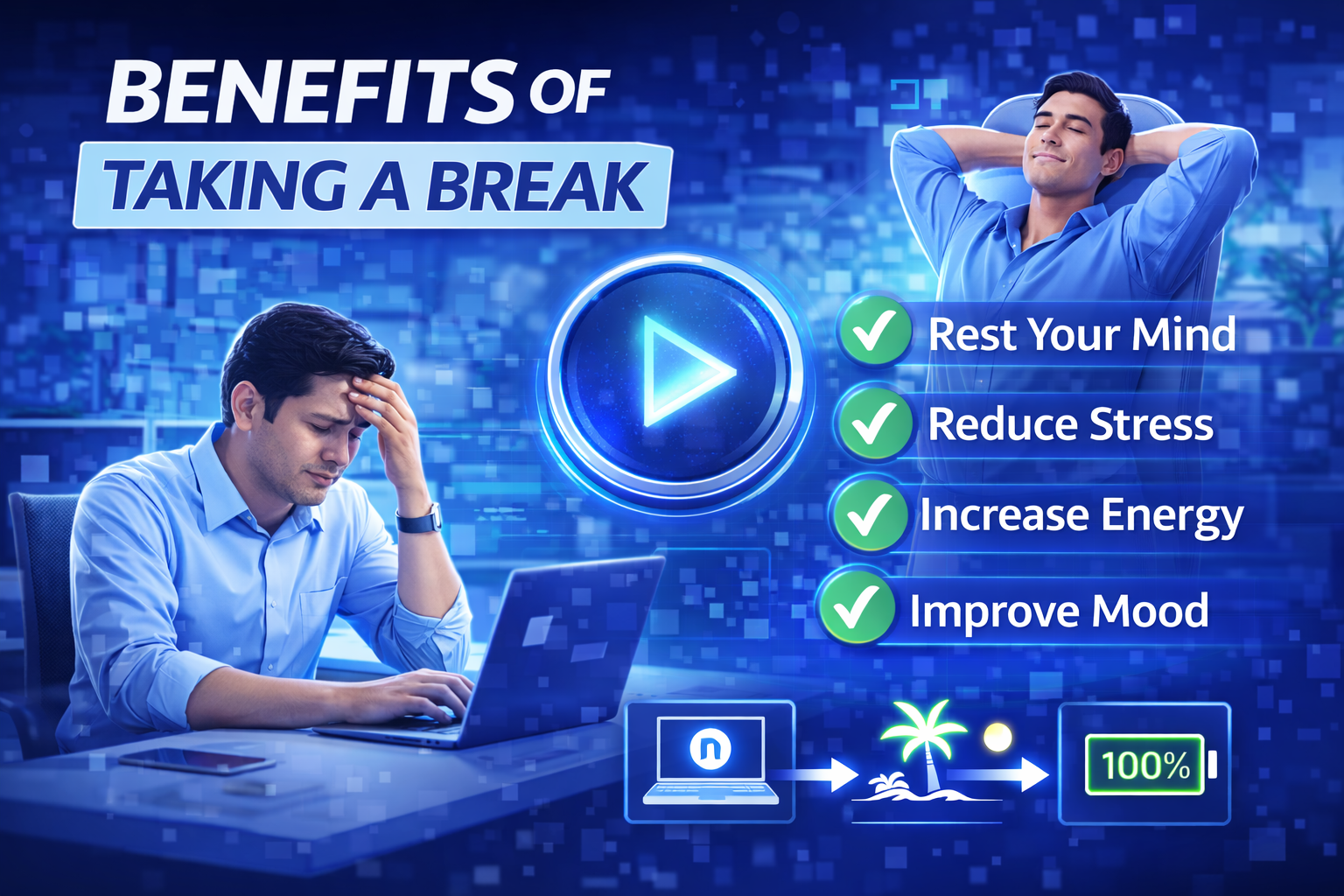
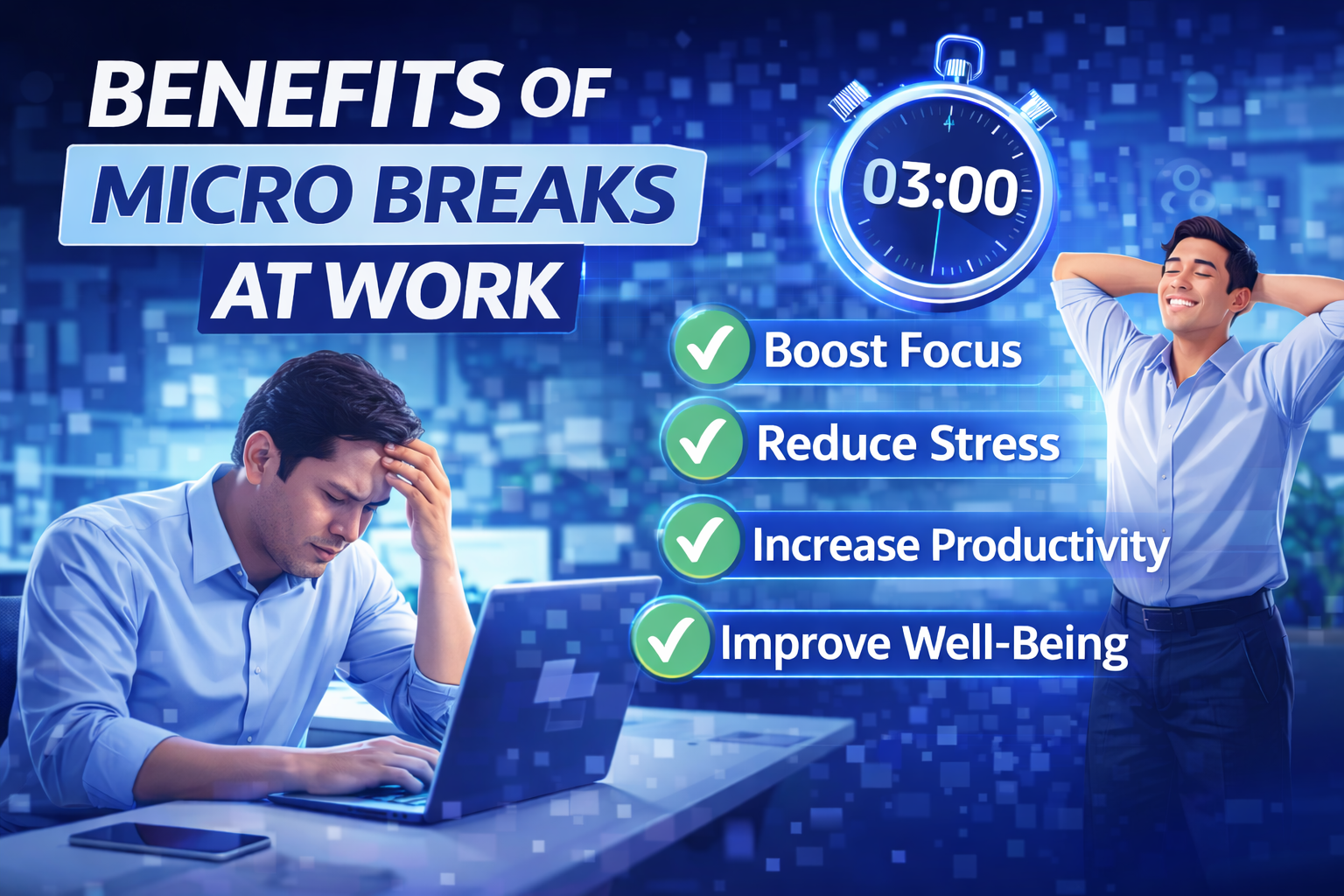
In today’s demanding work culture, you often sit for hours, stare at screens, and push through tasks without pause. The benefits of micro breaks at work can transform how you perform, think, and feel throughout your day.
When you learn to pause with intention for just a few minutes, you protect your focus, reduce fatigue, and return to your tasks with sharper energy and stronger decision-making. Here, we explained the benefits of taking micro breaks at work. Read on!
Why Micro Breaks Matter in Modern Workplaces
You work in an environment that rewards constant output, yet your brain and body function in cycles of effort and recovery. Research published in PLOS ONE reviewing more than 2,300 participants found that short breaks significantly reduced fatigue and increased vigor, even when the breaks lasted under ten minutes. When you respect your natural rhythm instead of fighting it, you create a high-performance routine that supports sustainable productivity.
Micro breaks interrupt prolonged sitting and mental strain before they turn into errors, irritability, or burnout. You may believe pushing through exhaustion shows discipline, but science shows that strategic pauses improve accuracy and concentration. By embedding short recovery moments into your workflow, you create a system that works with your biology rather than against it.
Improved Focus and Mental Clarity
Your attention span declines when you remain on a single task for too long without relief. A brief pause of 30 to 60 seconds every 20 minutes can reset your cognitive load and sharpen your concentration. When you step away intentionally, your mind clears background noise and prepares for more precise, high-quality output.
If you want a simple way to protect these pauses, using a 3 Minutes Timer for better focus during demanding work blocks helps you break the habit of working past fatigue. A visible countdown makes it easier to honor the break without negotiating with yourself in the moment. When you return to work after a short reset, you often complete tasks faster and with fewer mistakes.
Reduced Stress and Better Emotional Control
Chronic stress accumulates quietly when you stay in continuous work mode. Short breaks help lower heart rate, relax tense muscles, and regulate breathing, which reduces the body’s stress response. When you create space for even a few minutes of deep breathing or light stretching, you interrupt the buildup of tension before it affects your mood.
You also improve emotional regulation when you step away from frustrating tasks. A short pause gives you distance from reactive thinking and supports better decision-making in complex situations. Instead of responding impulsively, you return with composure and a clearer strategy.
Lower Risk of Musculoskeletal Injuries
Prolonged sitting compresses soft tissues, restricts blood flow, and strains your neck, shoulders, and lower back. Occupational health experts recommend micro breaks of 30 to 60 seconds to prevent fatigue in the muscles that maintain posture. When you stand, stretch, or walk briefly, you restore circulation and reduce stiffness before discomfort escalates into injury.
Micro breaks work best when you treat time like a measurable resource, and knowing how many minutes you have between meetings makes it easier to plan quick movement breaks realistically. When you become conscious of time in small, workable units, you make smarter choices about when to stand and reset your posture. Over weeks and months, this habit protects your long-term physical health.
Better Eye Health and Reduced Screen Fatigue
Staring at a screen for extended periods strains your eyes and contributes to headaches and blurred vision. The 20-20-20 rule suggests that every 20 minutes, you look at something 20 feet away for 20 seconds to relax eye muscles. When you consistently apply this simple technique, you reduce digital eye strain and maintain visual comfort throughout the day.
You can also lower brightness, adjust contrast, and blink intentionally during breaks to maintain eye moisture. These small actions, repeated consistently, prevent cumulative strain that could otherwise impact your performance. By treating your eyes as part of your productivity system, you protect both comfort and output.
Enhanced Creativity and Problem-Solving
When you stay immersed in a task for too long, your thinking narrows and becomes rigid. Micro breaks allow your subconscious mind to process information in the background, often leading to creative insights. You may notice that solutions appear naturally after stepping away for a short walk or a mindful pause.
Creative breakthroughs often happen when attention relaxes rather than when it strains. By giving your brain brief intervals of freedom, you encourage flexible thinking and innovation. This approach strengthens your ability to approach challenges from multiple angles.
Increased Motivation and Job Satisfaction
Constant pressure without relief erodes motivation over time. When you integrate micro breaks into your day, you create a rhythm that feels manageable and supportive. This structure increases your sense of control and helps you feel more engaged in your work.
Short breaks also make long projects feel less overwhelming. Instead of viewing tasks as endless, you divide them into focused segments separated by restorative pauses. This segmentation builds momentum and keeps your energy stable throughout the day.
Stronger Time Awareness and Productivity
You often underestimate or overestimate how long tasks require, which leads to stress and inefficiency. When you understand how a timer work in a practical sense, you can structure work into clear effort intervals that protect your focus and limit mental overload. A timer becomes a productivity tool that supports discipline without forcing you to rely on willpower alone.
When you schedule work in focused blocks followed by short breaks, you increase output quality. This approach mirrors proven productivity methods that rely on defined time segments. Over time, you develop sharper awareness of how you allocate minutes and where you can improve efficiency.
Practical Ways to Implement Micro Breaks
You do not need complex systems to benefit from micro breaks. Simple, consistent actions make the greatest difference when repeated daily. Consider integrating the following strategies into your schedule:
- Stand and stretch for 30 to 60 seconds every 20 minutes
- Walk to a colleague instead of sending a message
- Perform light shoulder and neck mobility exercises
- Practice controlled breathing for two to three minutes
- Look away from your screen using the 20-20-20 rule
You can place reminders on your calendar or use a timer to maintain consistency. When breaks become automatic rather than optional, you remove the mental friction that often prevents healthy habits. Over time, these short actions compound into measurable performance gains.
How Micro Breaks Prevent Burnout
Burnout develops gradually when high demands meet insufficient recovery. Micro breaks act as preventive maintenance for your mental and physical systems. By reducing cumulative stress and fatigue, you maintain resilience during demanding seasons.
You also strengthen boundaries by respecting your need for rest, even in fast-paced environments. When you model healthy work rhythms, you contribute to a culture that values sustainable performance. This approach protects both your well-being and your long-term career growth.
Building a Sustainable Micro Break Routine
Consistency determines whether micro breaks become transformative or forgotten. Start with a realistic schedule, such as a one-minute pause every 20 minutes or a three-minute reset every hour. When you build this habit gradually, it feels natural rather than disruptive.
Track your energy levels and productivity before and after implementing breaks to measure impact. You may notice fewer errors, improved mood, and stronger concentration by the end of the week. With steady practice, the benefits of micro breaks at work become an integral part of your high-quality performance system.
Conclusion
The benefits of micro breaks at work extend far beyond simple rest. When you pause intentionally, you enhance focus, reduce stress, protect your body, and support clearer decision-making throughout your day.
By integrating short, structured pauses into your routine, you create a balanced system that sustains productivity without sacrificing health, allowing you to perform at a consistently high level while preserving long-term well-being.

Jammie Justice
Jammie Justice is an accomplished tech writer with a keen eye for emerging technologies and a knack for breaking down complex topics into reader-friendly insights. With a background in software engineering and hands-on experience in full-stack development, she covers everything from API design and cybersecurity to cloud-native architectures. Jammie’s articles and tutorials empower developers and tech enthusiasts to adopt best practices, troubleshoot common pitfalls, and stay ahead of industry trends. Her clear, conversational style and commitment to accuracy make her a trusted voice in the tech community.