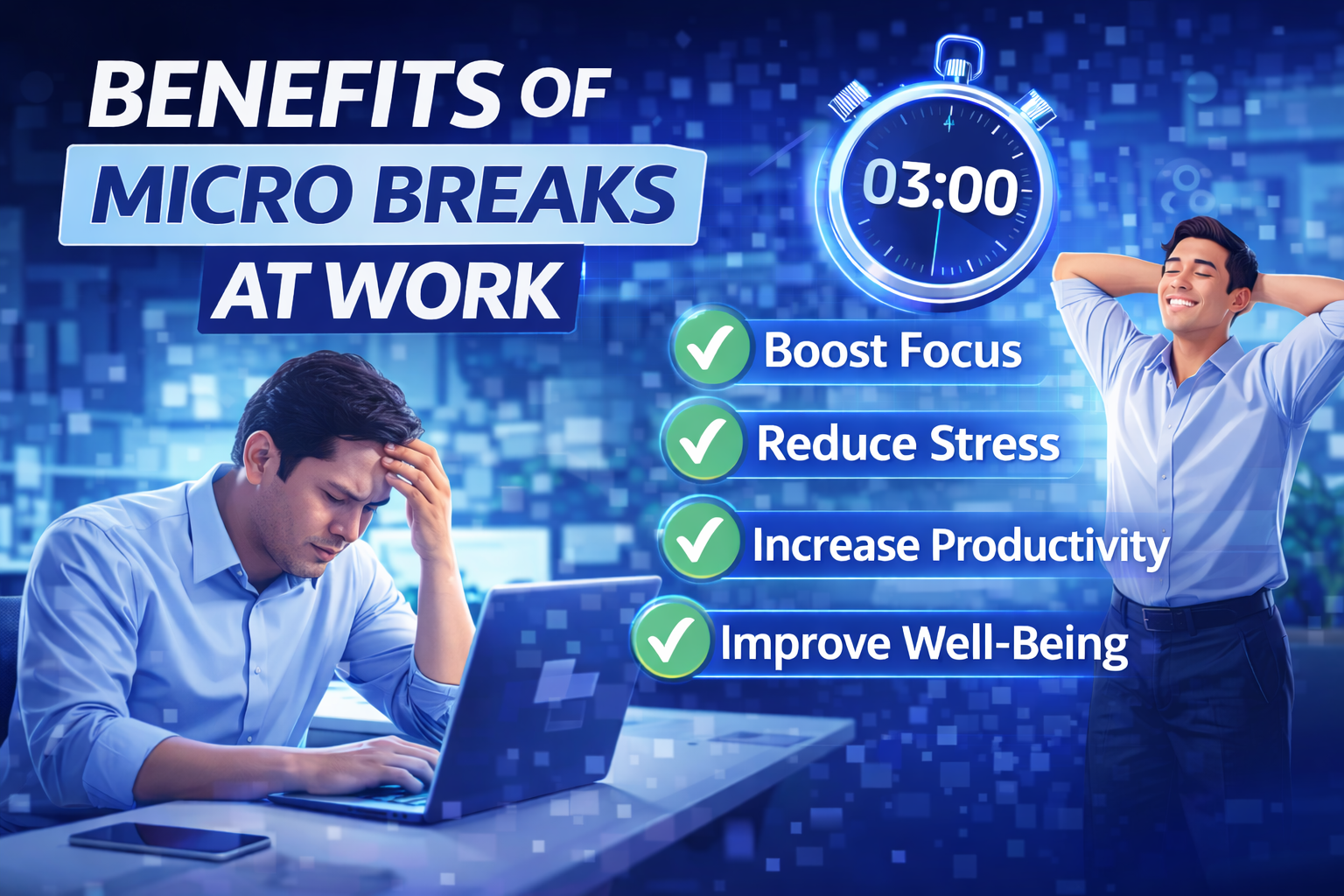
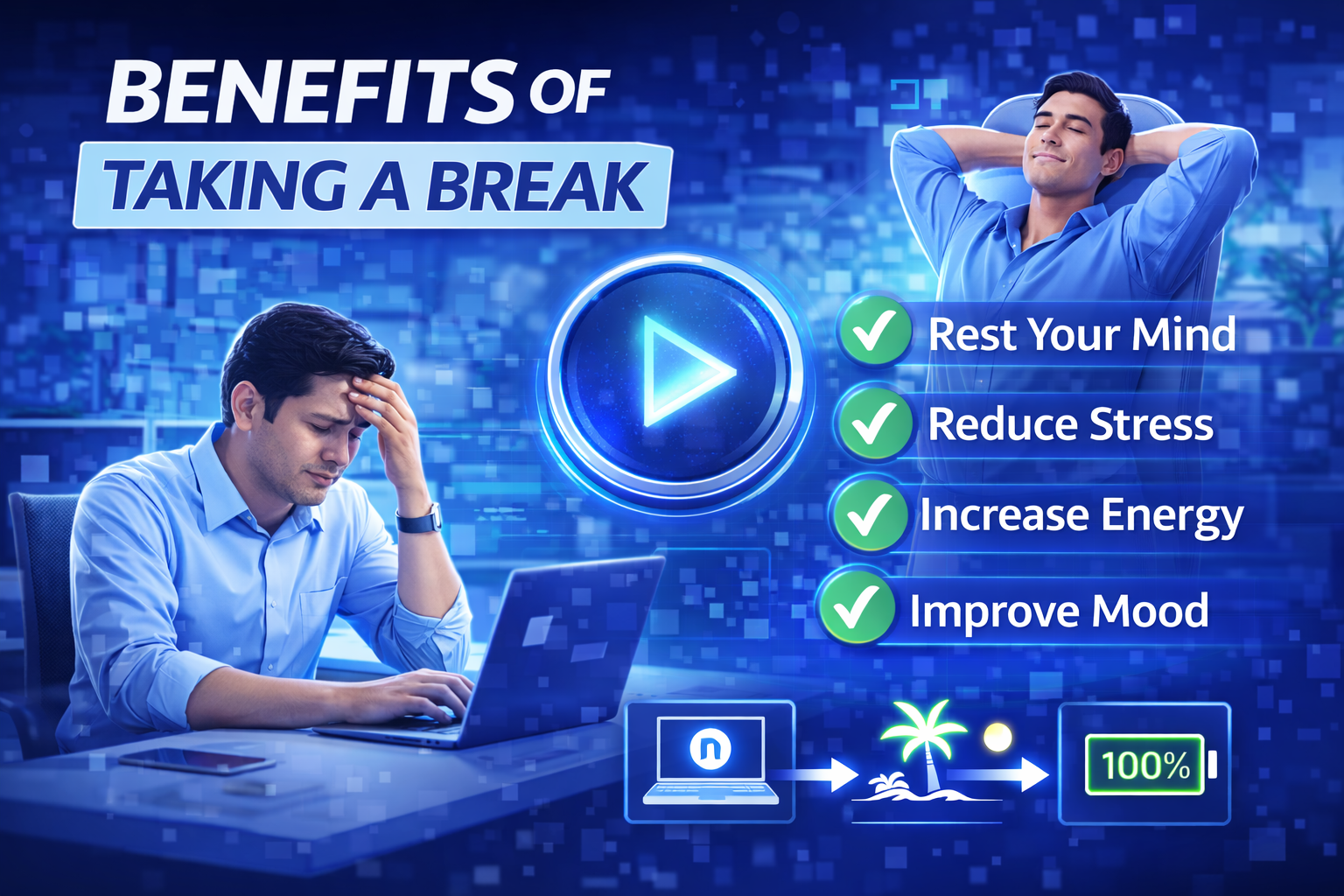
The benefits of taking a break go far beyond simple relaxation, especially in a fast-paced American work culture that rewards constant output. When you step away strategically, you improve focus, protect your mental health, and make smarter decisions without burning out.
If you want sustainable productivity instead of short-term hustle, you need to understand how purposeful breaks transform the way you work and live.Keep digging deep for more useful information on the benefits of taking breaks during work.
Why Your Brain Needs Regular Breaks
Your brain is not designed for endless concentration, no matter how disciplined you are. After sustained cognitive effort, the prefrontal cortex becomes fatigued, which weakens attention control, impulse regulation, and high-quality decision-making. When you take a break, you allow neural circuits to reset, which restores clarity and supports stronger performance during your next work block.
Research consistently shows that attention declines after roughly 20 to 30 minutes of intense focus. By stepping away at regular intervals, you protect your ability to process information accurately and avoid costly errors. The benefits of taking a break become clear when you notice improved mental sharpness after even a short pause.
How Breaks Reduce Stress and Prevent Burnout
Chronic stress builds when you push through fatigue without recovery. Over time, elevated stress hormones affect mood, immune response, and overall well-being, increasing your risk of burnout. By taking structured pauses, you interrupt that stress cycle and give your nervous system time to stabilize.
Short breaks lower mental tension and prevent emotional overload during demanding tasks. When you detach from work-related thoughts, even briefly, you return with greater composure and resilience. The benefits of taking a break include reduced exhaustion and stronger long-term sustainability in high-performance environments.
The Link Between Breaks and Productivity
You may assume that more hours equal more output, but research tells a different story. Micro-breaks and lunch breaks that involve genuine detachment are linked to higher energy levels and improved performance across the day. Instead of draining your reserves, you maintain steady productivity by pacing your effort.
When you skip breaks, performance often drops sharply in the afternoon. In contrast, regular pauses help you maintain consistent output and reduce the need for late-night recovery. The benefits of taking a break directly influence how much high-quality work you complete, not just how long you sit at your desk.
Boosting Creativity Through Strategic Pauses
Creativity thrives when you step away from a problem. During a break, your brain shifts into a more diffuse mode of thinking, allowing ideas to connect in new and unexpected ways. Many breakthrough insights occur when you walk, shower, or relax rather than when you force concentration.
If you feel stuck, a brief creative pause can unlock solutions faster than pushing harder. Activities like light movement, daydreaming, or sketching allow your mind to reorganize information. The benefits of taking a break include sharper innovation and better problem-solving under pressure.
Improving Memory and Learning Retention
Breaks strengthen memory consolidation by giving your brain time to process information. When you study or work continuously without pause, retention drops because your brain becomes overloaded. Short recovery periods improve how well you encode and recall information later.
Students and professionals alike benefit from structured focus intervals followed by brief resets. This approach supports long-term retention and reduces mental fatigue during complex tasks. The benefits of taking a break extend to better comprehension, improved recall, and higher learning efficiency.
Physical Health Benefits of Stepping Away
Sitting for extended periods increases stiffness, reduces circulation, and raises long-term health risks. Even three minutes of gentle movement every half hour can support blood flow and reduce musculoskeletal strain. Standing, stretching, or walking to refill water protects your body while refreshing your mind.
Physical movement also boosts alertness and mood through improved oxygen flow and mild dopamine release. When you integrate short activity bursts into your day, you protect both physical and cognitive health. The benefits of taking a break include fewer aches, improved posture, and greater daily energy.
Choosing the Right Type of Break
Not all breaks restore energy equally. Scrolling endlessly on your phone can overload your attention with rapid decision-making and fragmented stimuli, leaving you more depleted than before. An effective break should help you detach from work and feel intrinsically motivated to engage in the activity.
You can categorize restorative breaks into several types:
- Physical rest through movement or stretching
- Mental rest through meditation or quiet reflection
- Creative rest through hobbies or nature exposure
- Social rest through meaningful connection
Matching the break to your specific need maximizes the benefits of taking a break.
Timing Your Breaks for Maximum Impact
Timing matters as much as the break itself. A widely used method involves 25 minutes of focused work followed by five minutes of rest, with a longer pause after several cycles. Even a one-minute reset can be effective if it truly disconnects you from the task.
If you want a simple tool to support structured pauses, you can rely on the 3 Minutes Timer for better focus to guide short, consistent recovery intervals. Using timed breaks removes guesswork and builds discipline around sustainable work rhythms. The benefits of taking a break become measurable when you adopt a repeatable system.
Reassessing Goals During Breaks
Breaks are not only for rest but also for reflection. Stepping back allows you to evaluate progress, identify inefficiencies, and recalibrate priorities with a clearer mind. This big-picture thinking improves strategic planning and reduces reactive decision-making.
When you pause intentionally, you can ask whether your current approach aligns with your goals. Tools that clarify time awareness, such as insights found in how much time, help you evaluate whether your schedule reflects your priorities. The benefits of taking a break include stronger alignment between daily actions and long-term objectives.
Building a Break Habit That Sticks
Consistency transforms breaks from occasional relief into a performance strategy. Setting reminders, pairing breaks with natural task transitions, and planning enjoyable activities increase adherence. When you notice improved focus after a pause, you reinforce the habit through positive feedback.
Understanding mechanisms described in how does a timer work can deepen your appreciation for structured time management tools. By automating reminders, you remove reliance on willpower and create a reliable rhythm. The benefits of taking a break compound when practiced daily.
Creating a Culture That Values Recovery
In many workplaces, busyness is celebrated while rest is misunderstood. However, high-performing organizations increasingly recognize that sustainable output requires structured recovery. Encouraging walking meetings, scheduled lunch breaks, and short movement pauses strengthens team energy and morale.
When leaders model healthy break behavior, employees feel permission to do the same. This shift reduces burnout, supports mental health, and improves collaboration across teams. The benefits of taking a break extend beyond individuals to entire organizations striving for consistent excellence.
Conclusion
The benefits of taking a break are grounded in neuroscience, workplace research, and real-world performance outcomes. By protecting your brain from overload, lowering stress, boosting creativity, and improving physical health, you position yourself for sustained success rather than temporary gains.
When you adopt structured pauses as a non-negotiable part of your routine, you build resilience, sharpen focus, and elevate the quality of your work in every area of life.
FAQs
What are the main benefits of taking a break during work?
The benefits of taking a break during work include improved focus, reduced stress, better decision-making, and increased productivity. Short pauses help your brain recover from cognitive fatigue, allowing you to return with sharper attention and stronger performance throughout the day.
How often should you take a break for better focus?
You should take a short break every 20 to 30 minutes of focused work to maintain high-quality concentration. Research suggests structured intervals prevent mental fatigue, protect attention span, and help you sustain consistent productivity without experiencing burnout or cognitive overload.
Can short breaks really improve productivity?
Yes, short breaks improve productivity by restoring mental energy and preventing attention decline. When you pause strategically, you reduce errors, maintain steady output, and avoid the performance drop that typically occurs after long periods of uninterrupted work.
How do breaks reduce stress and burnout?
Breaks reduce stress by lowering mental strain and interrupting continuous cognitive effort. Stepping away allows your nervous system to reset, decreases emotional overload, and helps prevent burnout, especially in demanding workplaces or high-pressure academic environments.
What type of break is most effective?
The most effective break depends on your needs, but movement, light stretching, meditation, and brief social interaction often work best. A restorative break should help you detach from work-related thoughts and leave you feeling more energized than before.
Are phone and social media breaks helpful?
Phone and social media breaks are not always helpful because constant scrolling can overstimulate your brain. Instead of restoring focus, excessive digital activity may increase mental fatigue, reduce attention control, and make it harder to re-engage with important tasks.
How long should a productive break last?
A productive break typically lasts between three and ten minutes for short intervals, with longer breaks after extended focus cycles. Even one-minute pauses can help if they involve true mental detachment and a shift away from demanding tasks.
Do breaks help with memory and learning?
Breaks support memory consolidation by giving your brain time to process and organize information. When you pause between study sessions or complex tasks, you improve retention, enhance comprehension, and strengthen your ability to recall information later.
Can taking breaks improve creativity?
Taking breaks improves creativity by allowing your brain to enter a more relaxed thinking mode. When you step away from a problem, your mind connects ideas subconsciously, often leading to innovative solutions and clearer perspectives.
Why do many people feel guilty about taking breaks?
Many people feel guilty about taking breaks because workplace culture often equates constant activity with productivity. However, research shows that structured recovery periods increase efficiency, meaning breaks are a strategic performance tool rather than a sign of laziness.

Jammie Justice
Jammie Justice is an accomplished tech writer with a keen eye for emerging technologies and a knack for breaking down complex topics into reader-friendly insights. With a background in software engineering and hands-on experience in full-stack development, she covers everything from API design and cybersecurity to cloud-native architectures. Jammie’s articles and tutorials empower developers and tech enthusiasts to adopt best practices, troubleshoot common pitfalls, and stay ahead of industry trends. Her clear, conversational style and commitment to accuracy make her a trusted voice in the tech community.